Strategic Leadership in Clinical AI & Enterprise Innovation

Zachi I. Attia, PhD MBA

Leading the translation of artificial intelligence from breakthrough research to global clinical scale. My work bridges the gap between technical innovation and measurable enterprise impact.

From pioneering AI-ECG models and prospective global trials to obtaining FDA clearances and establishing CMS reimbursement, I build and lead systems that transform patient care. Today, I guide Mayo Clinic's Enterprise Generative AI strategy, focusing on high-integrity foundation models that move beyond technical novelty and toward institutional trust, safety, and scalable ROI.
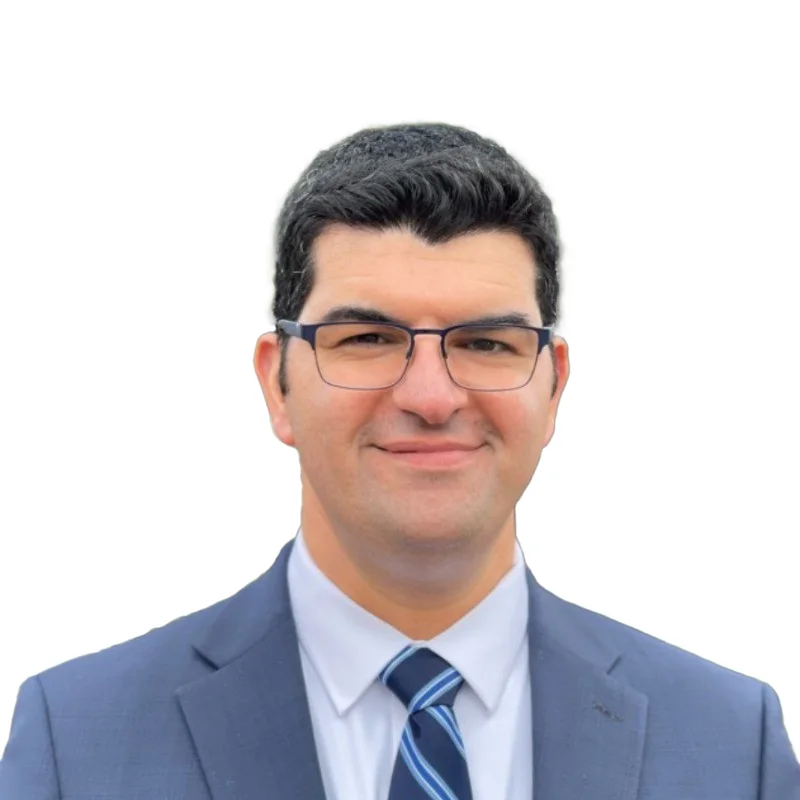
Zachi I. Attia
  • Lead, Sovereign AI, Mayo Clinic Enterprise Generative AI Initiative
  • Executive MBA, MIT Sloan (2025)
  • PhD, Computational Biology, University of Minnesota
  • MSc, BSc Electrical and Computer Engineering, Ben-Gurion University
  • 20+ years applied R&D, 11+ years AI-healthcare
  • Inventor on 20 patents, 3 FDA-cleared AI diagnostics

Vision

Clinical AI is shifting from narrow predictors to system-level tools that will support real clinical decisions. My work focuses on three principles:

01

Strategic Validation

Clinical AI must be validated with the same rigor as an enterprise diagnostic. We move beyond technical demos to prospective, randomized trials that mitigate risk and prove clinical efficacy in real-world environments.

02

Scalable Clinical Impact

Technological novelty is secondary to market adoption. We prioritize models that integrate into high-volume workflows, ensuring that innovation translates into measurable value and institutional ROI.

03

Enterprise Governance

Integrity and safety are strategic imperatives. As part of Mayo Clinic's top-tier Generative AI initiative, we build enterprise guardrails like CURE to ensure safety, reliability, and trust across the system.

Research Journey

Our work represents a systematic progression from proving AI can enhance cardiac diagnostics to deploying these tools in real clinical settings and building next-generation foundation models.

Phase 1

Seeing the Invisible (AI-ECG)

We demonstrated that deep learning can detect reduced ejection fraction, atrial fibrillation, cardiomyopathy, and other conditions using standard ECGs-even when findings are invisible to expert readers.

Impact: Established the concept that routine clinical signals contain far more information than humans can perceive.
Phase 2

Beyond ECG (Echocardiography & Imaging)

We adapted these ideas to echocardiograms, developing models that infer ejection fraction and structural features-even from a single frame.

Impact: Showed that the principle generalizes across modalities and that minimal imaging can still contain actionable information.
Phase 3

Trials, FDA Clearance, CMS Reimbursement

We led or co-led the first randomized clinical trials of AI-ECG screening, obtained multiple FDA 510(k) clearances, and achieved CMS reimbursement. These AI tools have since been used in more than 800,000 patient encounters.

Impact: AI moved from algorithm to regulated clinical tool-closing the translation gap most AI research never crosses.
Phase 4

Multimodal Early Fusion Foundation Models

Today our team is developing multimodal foundation systems integrating ECG, echocardiography, imaging, waveforms, and clinical text in early fusion architectures. These models will serve as core backbones for diverse clinical tasks across Mayo Clinic.

Impact: Toward AI systems that understand complex clinical states, not isolated predictions.

Strategy & Leadership

I lead multidisciplinary teams to solve the most complex challenges in clinical AI. We bridge the gap between high-level institutional strategy and ground-level technical execution to unlock precision healthcare at scale.

Enterprise Integration

  • Cross-functional leadership across Clinical, IT, and Operations
  • Workflow optimization with measurable clinical ROI
  • Regulatory science and accelerated FDA pathways
  • Institutional change management for AI adoption

Strategic Governance

  • Developing frameworks for trustworthy generative AI
  • Falsifiable explainability for clinical safety
  • Evaluation systems for bias and artifact mitigation
  • LLM safety and enterprise security integration

Market Translation

  • Moving models from R&D to 800K+ patient encounters
  • Achieving first-in-class CMS reimbursement levels
  • External validation and global multisite partnerships
  • Product-clinical fit lifecycle management

Multimodal Leadership

  • Pioneering early-fusion foundation models (CURE)
  • Strategic oversight of high-complexity clinical datasets
  • Enabling diverse downstream clinical applications
  • Future-proofing AI architecture for the healthcare enterprise

Explainability in AI Systems

We go beyond traditional heat maps to understand what models are actually using to make predictions. This includes perturbation studies, simulated signal experiments, counterfactual testing, and evaluating whether the model relies on physiologic features instead of artifacts or bias.

We apply the same approach to large language models, studying how they reason through multi-step clinical tasks, how errors arise, and how to prevent unsafe behaviors before they reach patient care.

Goal: Build AI systems that behave safely, consistently, and transparently so clinicians can trust the outputs.

Selected Publications

Core AI-Cardiology

Global & Population Health

Multimodal & Generative AI

Media & Press Coverage

Join Our Team

Our group includes researchers, clinicians, engineers, analysts, and regulatory experts from more than eight countries, working together on AI systems that matter.

We Welcome

Ideal Experience

Current Focus Areas

We value people who can take an idea from concept to working prototype to clinical study.

Connect on LinkedIn